
If you love the thrill of winding roads, dramatic landscapes, and views that take your breath away, then the Most Magnificent Mountain Passes in the Western Cape should be at the top of your travel list. These routes aren’t just about getting from one town to another; they’re experiences in their own right, offering endless photo opportunities, heart-racing bends, and the kind of scenery that makes you want to pull over and take it all in.
The Western Cape boasts some of the most diverse terrain in South Africa, and driving through its mountain passes connects you with nature in the most exhilarating way. From the rocky slopes of the Cederberg to the lush valleys of the Garden Route, each pass tells a story of both natural beauty and human determination to cross formidable landscapes.
What makes these mountain passes so extraordinary is the way they seamlessly weave together history, engineering, and nature. Built to link small towns and remote villages, they opened trade, travel, and opportunity across the province. Today, they stand not just as practical routes but as thrilling journeys that every road trip enthusiast should experience.
The History of Mountain Passes in the Western Cape

Long before tar and gravel roads cut across the Cape’s mountains, communities relied on treacherous footpaths and rudimentary wagon tracks to move between valleys. Mountain passes became essential lifelines, connecting farmers to markets, linking coastal towns with inland villages, and opening up opportunities for trade and commerce. Master road builders like Andrew Geddes Bain and his son Thomas Bain transformed the province in the 1800s, carving some of the most iconic routes still in use today.
These passes weren’t just practical; they changed the social and economic landscape of the Cape. Villages like Montagu, Ceres, and Franschhoek thrived once passes linked them to the rest of the province. Today, driving these roads isn’t only about the destination; it’s about reliving the stories of determination and craftsmanship that shaped South Africa’s travel network.
Chapman’s Peak Drive

Hugging the cliffs between Hout Bay and Noordhoek, Chapman’s Peak Drive is one of the most iconic coastal mountain passes in the world. Known as “Chappies” by locals, the 9-kilometre route is famous for its dramatic ocean views, sharp curves, and engineering marvels carved into sheer cliffs. Every bend offers a new perspective of the Atlantic coastline, making it a favourite for Sunday drives, cycling, and photography.
The drive opened in 1922 and has since become a bucket-list journey for both locals and tourists. At sunrise or sunset, the road glows in golden hues, and travellers often stop at viewpoints to soak in the breathtaking panoramas. It’s not just a road; it’s an experience that captures the spirit of the Cape Peninsula.
Beyond its beauty, Chapman’s Peak connects communities and serves as a gateway to the Cape Point region. For travellers, it’s the perfect introduction to the wild beauty of the Cape Peninsula, with its rugged cliffs, sparkling seas, and unforgettable atmosphere.
Website:https://www.chapmanspeakdrive.co.za/
Bainskloof Pass
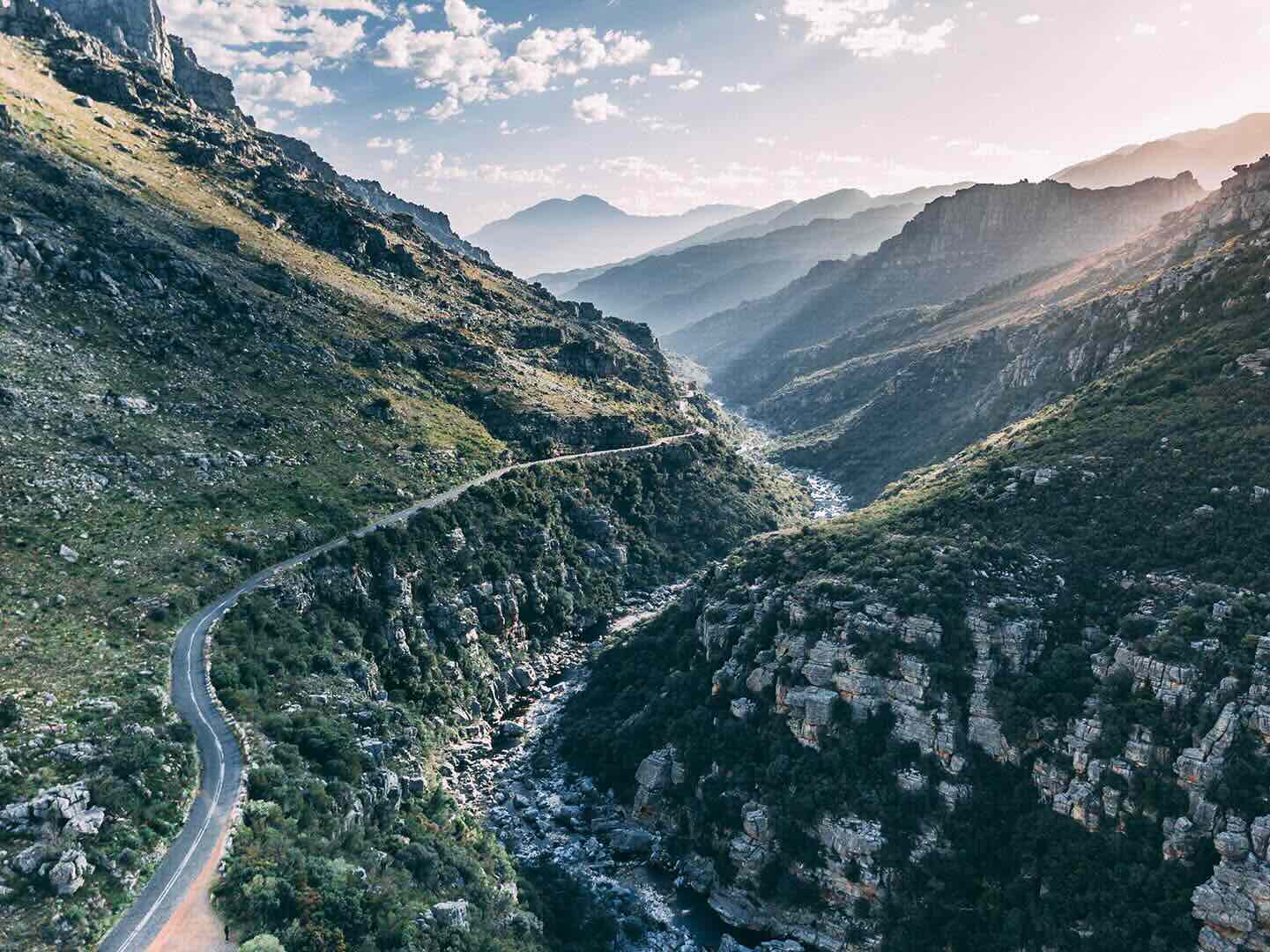
Few routes can match the grandeur of Bain’s Kloof Pass, a masterpiece completed in 1853 by Andrew Geddes Bain himself. Stretching between Wellington and Ceres, the pass remains one of the most remarkable examples of early road engineering in South Africa.
The 30-kilometre drive sweeps through the Limietberg Nature Reserve, offering panoramic views of river valleys, waterfalls, and towering peaks. Along the way, there are picnic spots, hiking trails, and swimming holes that make it a perfect day trip for nature lovers.
Bain’s Kloof is steeped in heritage. Every bend carries echoes of history, and its enduring beauty continues to captivate travellers, cyclists, and adventurers alike.
Du Toitskloof Pass

Du Toitskloof Pass connects Paarl to Worcester, slicing through the spectacular Du Toitskloof Mountains. Before the tunnel opened in 1988, this 48-kilometre pass was the main route across the range, and it remains a favourite for those who prefer scenery over speed.
Sweeping curves lead travellers past dramatic cliffs, with sweeping vistas of the Breede Valley opening up at almost every turn. On misty days, the road feels ethereal, as though you’re driving through the clouds.
The pass is also rich in biodiversity, with fynbos carpeting the slopes and birdlife filling the skies. For anyone who loves mountain driving, Du Toitskloof is a journey you won’t forget.
Franschhoek Pass

Franschhoek Pass, one of the oldest passes in South Africa, winds dramatically out of the historic wine town and climbs into the Mont Rochelle Nature Reserve. Built in 1825, the pass remains a breathtaking drive, offering sweeping views over the Franschhoek Valley and the vineyards that make this area world-famous.
The pass is a road of contrasts. On one side, the valley stretches out in a patchwork of vines and orchards, while on the other, cliffs rise dramatically from the road’s edge. At its highest points, the views are nothing short of spectacular, especially at sunrise or sunset when the mountains glow a golden hue.
For travellers, Franschhoek Pass is more than just a scenic drive; it’s a gateway to adventure. The route connects to Villiersdorp and the Theewaterskloof Dam, making it an ideal loop for a road trip through the Winelands. It’s also a favourite among cyclists and motorcyclists who crave its thrilling bends and exhilarating climbs.
Clarence Drive

Clarence Drive, also known as the R44 between Gordon’s Bay and Rooi-Els, is one of the Western Cape’s most breathtaking coastal routes. Hugging the mountainside above False Bay, the road sweeps around curves that reveal endless ocean vistas and towering cliffs. It’s the kind of drive that leaves you spellbound at every turn.
Built in the 1940s and named after Sir Clarence, the road was carved into sheer rock faces, making it an engineering marvel of its time. Today, it’s celebrated not just for its beauty but also for its accessibility, bringing travellers closer to the raw power of the Cape coastline.
Clarence Drive is also a hotspot for marine life viewing. From June to November, whales can often be spotted from the roadside lookouts, while dolphins and seals make regular appearances year-round. Combine that with charming coastal villages like Betty’s Bay along the way, and you have a road trip that blends natural wonder with cultural charm.
Sir Lowry’s Pass

Sir Lowry’s Pass is one of the most important gateways out of Cape Town, linking Somerset West with the Overberg region. Rising steeply out of the Helderberg Basin, the pass offers magnificent views over False Bay, stretching as far as Cape Point on a clear day.
Originally a wagon track used in the early 19th century, the pass was upgraded into a proper road in 1830 and named after Sir Lowry Cole, then governor of the Cape. Today, it forms part of the N2 highway, making it both a vital transport route and a scenic drive.
For travellers, Sir Lowry’s Pass is an adventure in itself. With viewing points at the summit, it’s a favourite stop for photographers. And for paragliders, the high vantage point provides some of the best launch spots in the Cape.
Swartberg Pass

Swartberg Pass is a masterpiece of road engineering, built by Thomas Bain in 1888. Stretching between Oudtshoorn and Prince Albert, the gravel road winds dramatically through the Swartberg Mountains and is now recognised as a UNESCO World Heritage Site.
The drive offers jaw-dropping scenery – towering cliffs, deep gorges, and layers of rock that reveal millions of years of geological history. At every twist, the colours shift from deep reds to pale greys, creating a natural canvas unlike anywhere else in the world.
Despite its ruggedness, the pass remains accessible for most vehicles, adding to its appeal. It’s a bucket-list journey for anyone exploring the Karoo, blending history, natural splendour, and adventure in one unforgettable road trip.
Cogmanskloof Pass

Tucked between Ashton and Montagu on the legendary Route 62, Cogmanskloof Pass winds through the Langeberg Mountains with sheer rock walls towering overhead. Completed by Thomas Bain in 1877, the pass is steeped in history and beauty, making it one of the most rewarding drives in the province.
The highlight of this pass is the iconic stone tunnel, blasted through solid rock, which remains a favourite photo spot for travellers. As you emerge from the tunnel, the views of Montagu’s valley unfold dramatically, with orchards, vineyards, and rugged peaks framing the route.
Cogmanskloof isn’t just a practical link; it’s a scenic drive that feels like stepping back in time. The surrounding cliffs still hold remnants of old forts and caves, adding a layer of intrigue to the natural wonder. It’s a journey where history and scenery collide spectacularly.
Seweweekspoort Pass

Remote, rugged, and utterly magnificent, Seweweekspoort Pass is a hidden gem that links Zoar with the Laingsburg area. Stretching for nearly 25 kilometres, the gravel pass winds through towering sandstone cliffs and dramatic gorges, making it one of the most impressive drives in the Klein Karoo.
Part of a UNESCO World Heritage Site, this pass is celebrated for its rare plant species and untouched natural beauty. With its winding turns and rock walls rising hundreds of metres high, it feels like a passage through time itself. Every twist reveals a new geological masterpiece, from weathered formations to striking colours in the stone.
Driving Seweweekspoort is an adventure. The gravel road adds to the excitement, and the isolation makes you feel as if you’ve discovered a secret route through the mountains. It’s a must for anyone who craves raw, unspoiled beauty far from the crowds.
Tradouw Pass

Connecting Barrydale and Swellendam, Tradouw Pass is one of the most scenic gateways between the Klein Karoo and the Overberg. Built in 1873 by Thomas Bain, the 17-kilometre pass winds through rugged cliffs and lush valleys that burst into colour during spring.
The name “Tradouw” comes from the Khoi word meaning “women’s path,” a reminder of its ancient history long before modern roads were built. Today, it offers breathtaking lookouts over the Langeberg Mountains, with rivers, waterfalls, and dramatic rock formations lining the route.
For road trippers, the drive is a feast for the senses. Every curve unveils new scenery, from fertile farmlands to rugged wilderness. Tradouw is more than just a connector; it’s a passage rich in history, culture, and natural splendour.
Gydo Pass

High above the orchards of the Ceres Valley, Gydo Pass offers a thrilling climb into the mountains. This tarred road is famous for its hairpin bends and its spectacular views over the farmlands below.
In winter, the pass often transforms into a snowy wonderland, drawing families eager to experience a rare Cape snowfall. In spring, the surrounding slopes burst into blossoms, painting the landscape with vibrant colour.
For adventurers, Gydo is also the gateway to more rugged routes leading deeper into the mountains. It’s a pass that combines accessibility with pure alpine drama.
Prince Alfred’s Pass

Prince Alfred’s Pass is the longest mountain pass in South Africa, stretching nearly 68 kilometres between Knysna and Uniondale. Designed by Thomas Bain and completed in 1867, it remains one of his most ambitious projects, taking 13 years to complete.
The gravel pass winds through lush forests, river valleys, and dramatic mountains, offering an ever-changing landscape that keeps travellers enthralled. Along the way, you’ll find hidden waterfalls, riverside picnic spots, and plenty of opportunities to stop and take in the scenery.
Because of its length and variety, the pass feels like multiple journeys rolled into one. It’s a true adventure, rewarding those who love exploring off-the-beaten-path routes through South Africa’s wilderness.
Montagu Pass

Built in 1848, Montagu Pass is one of the oldest unaltered mountain passes in South Africa, connecting George with Oudtshoorn via the Outeniqua Mountains. Constructed by convict labour, the pass remains a living piece of history.
The gravel road winds through lush forests, with old stone bridges and original toll houses still standing along the route. Each curve feels like stepping back in time, offering both history and beauty in equal measure.
Montagu Pass has an old-world charm that makes it a favourite among travellers seeking nostalgia and scenery. With the modern Outeniqua Pass nearby, this route provides a quieter, more immersive experience.
Hex River Pass

The Hex River Pass, part of the N1 highway, carries travellers through the rugged Hex River Mountains near De Doorns. The steep gradients and sharp bends make it an exhilarating drive, framed by sheer cliffs and wide valleys.
The region is famous for its vineyards, which turn brilliant shades of red, gold, and orange in autumn. In winter, snow often caps the surrounding peaks, adding even more drama to the landscape.
As one of the key routes linking the Cape with the interior, Hex River Pass combines practicality with striking beauty. For anyone travelling along the N1, it’s a stretch of road that demands admiration.
Helshoogte Pass

Connecting Stellenbosch to Franschhoek, Helshoogte Pass is as much about heritage as it is about scenery. Surrounded by vineyards and the dramatic slopes of the Simonsberg, the route takes you into the heart of the Cape Winelands. It’s no wonder it’s one of the most loved drives in the Western Cape.
The pass offers breathtaking views over rolling vineyards and lush valleys, making it perfect for wine lovers and road trippers alike. Along the way, world-class wine estates invite you to stop and savour the region’s offerings while soaking in the landscapes.
Historically, travellers once braved the old Banhoek path before the modern road was constructed. Today, remnants of that route still exist for hikers to explore, adding a fascinating glimpse into the past. Helshoogte is more than just a road; it’s a journey into the culture, history, and beauty of the Cape Winelands.
Michell’s Pass

Carved through the Obiqua Mountains, Michell’s Pass links the towns of Ceres and Tulbagh along the R46. Built in 1848 by Andrew Geddes Bain, the route showcases both engineering brilliance and natural splendour.
One of its highlights is the Tolhuis, a national monument that preserves the history of toll collection on the pass. Visitors can explore the old toll house while enjoying spectacular mountain views that frame the route.
Michell’s Pass remains a vital link, but for travellers, it’s more than that; it’s a scenic drive through history. Every turn whispers of the determination it took to tame the rugged terrain and create a lifeline into the heart of Ceres.
Kaaimans River Pass

Stretching along the N2 between George and Wilderness, Kaaimans River Pass is a showcase of the Garden Route’s raw coastal beauty. The pass hugs mountain slopes and descends into the gorge carved by the Kaaimans River, creating breathtaking panoramas.
One of its best features is Dolphin Point, a popular lookout where travellers often spot dolphins surfing the waves below. In winter, the ocean sometimes reveals whales, too, adding even more magic to the drive.
This pass combines convenience with spectacle. As part of the famous Garden Route, it’s an essential link, but its natural beauty makes it a destination all on its own. Photographers, adventurers, and holidaymakers all pause here to admire the view.
Ou Kaapse Weg

Ou Kaapse Weg, cutting across the Steenberg Mountains, offers a direct link between Cape Town’s southern suburbs and the Fish Hoek Valley. Constructed in 1968, the pass has become a favourite for those seeking both practicality and beauty.
The views from the top stretch across False Bay, the Atlantic Ocean, and Table Mountain in the distance. On clear days, it’s one of the most rewarding lookouts in the entire city.
The pass also gives access to the Silvermine Nature Reserve, where hiking trails, dams, and picnic spots invite visitors to linger. Ou Kaapse Weg is more than just a road; it’s a gateway to adventure, nature, and sweeping panoramas.
Robinson Pass

Linking Mossel Bay with Oudtshoorn, Robinson Pass winds through the dramatic Outeniqua Mountains. Built in 1869 by Thomas Bain, the road remains a triumph of 19th-century engineering.
The drive reveals lush valleys, sheer rock walls, and, on misty days, an atmosphere that feels almost mystical. Wildlife sightings add to the excitement, with baboons and birdlife often spotted along the route.
Robinson Pass is steeped in history, too. A stone memorial on the route pays tribute to lives lost in a tragic accident, reminding travellers of the road’s storied past. Today, the tarred road provides both safety and scenery in equal measure.
Garcia Pass

Garcia Pass cuts through the Langeberg Mountains, connecting Riversdale with Ladismith. Laid out in 1868 and upgraded by Thomas Bain, the pass remains one of the most scenic drives in the Klein Karoo.
The road winds past rugged cliffs and lush greenery, with sweeping views that make every kilometre a delight. Along the route, the preserved toll house, now a national monument, tells the story of early travellers.
Driving Garcia Pass is like stepping into a painting. The combination of mountain grandeur and historical landmarks makes it one of the Western Cape’s most captivating routes.
Misty Cliffs Road

True to its name, Misty Cliffs Road is often wrapped in a dramatic coastal fog, adding an otherworldly atmosphere to the drive. This short but unforgettable route links Scarborough with Kommetjie, clinging to the mountainside above the Atlantic Ocean.
The cliffs, coves, and rugged vegetation create a wild, untouched landscape. On clear days, the road opens up to jaw-dropping views of the sea, while misty mornings turn it into a mystical journey.
For travellers seeking a peaceful escape, Misty Cliffs Road offers serenity in abundance. It’s less busy than other Cape Peninsula routes, making it a hidden treasure for road trippers and photographers.
Victoria Road

Running from Sea Point to Hout Bay, Victoria Road hugs the base of the Twelve Apostles mountain range, offering one of Cape Town’s most photogenic drives.
Every curve reveals sweeping views of the Atlantic, framed by dramatic cliffs. At sunset, the road transforms into a golden ribbon, drawing locals and visitors alike for leisurely drives and photo stops.
Victoria Road is not only scenic but also easily accessible. Its combination of mountains, coastline, and urban convenience makes it one of the most loved routes in Cape Town, perfect for cycling, road trips, and unforgettable sunsets.
Pakhuis Pass (Cederberg)

As the gateway to the Cederberg Mountains, Pakhuis Pass is a rugged drive that rewards travellers with raw, untouched beauty. Linking Clanwilliam with the remote town of Wupperthal, the gravel route cuts through dramatic sandstone formations.
The pass was built in 1877 by Thomas Bain and remains a testament to his skill. Every twist reveals sculpted rocks that look almost otherworldly, with colours shifting from ochre to deep red in the changing light.
Along the way, hikers can access famous trails, including those leading to the Heuningvlei and the Rooibos tea-growing region. Pakhuis is more than a drive, it’s an adventure into the wild heart of the Cederberg.
Nieuwoudt’s Pass (Cederberg)

Nieuwoudt’s Pass winds through the northern Cederberg, linking Clanwilliam with the Algeria Forest Station. Known for its rugged charm, it’s a route that demands a steady hand and a love for wilderness.
The road cuts across steep mountain slopes, with sweeping views of valleys and rocky outcrops. On clear days, the visibility stretches for miles, revealing the scale of the Cederberg’s wild landscapes.
For travellers heading into the Algeria campsite or deeper into the Cederberg, Nieuwoudt’s Pass offers a thrilling start to the journey. Remote, beautiful, and wild, it captures the spirit of true adventure.
Eselbank Pass (Cederberg)

For sheer adventure, few routes rival Eselbank Pass. This rugged track winds its way through the high Cederberg, connecting Wupperthal with the Eselbank settlement.
The gravel road is narrow and steep, often requiring careful driving, but the views are magnificent. Waterfalls tumble down cliffs, while rocky outcrops frame the horizon.
It’s a road less travelled, perfect for explorers who crave solitude and raw beauty. Eselbank Pass proves that in the Western Cape, even the toughest drives can be the most rewarding.
Fun Facts About Mountain Passes
- The Western Cape has more than 140 registered mountain passes, making it one of the most pass-rich regions in the world.
- Legendary road builders Andrew Geddes Bain and his son Thomas Bain constructed more than 30 of them.
- Many passes, like Chapman’s Peak and Ou Kaapse Weg, double as both transport routes and popular tourist attractions.
- Seweweekspoort Pass is home to plant species found nowhere else on earth, making it a biodiversity hotspot.
- The longest pass in the province is Tradouw Pass, stretching almost 17 kilometres.
- Pakhuis Pass leads into one of the most famous rock art regions in South Africa, with San paintings hidden in caves and overhangs.
Driving through the Most Magnificent Mountain Passes in the Western Cape isn’t just about getting from A to B; it’s about embracing the journey itself. Each curve, climb, and descent reveals breathtaking views, hidden histories, and moments that remind you of the sheer beauty of South Africa.
So next time you hit the road, don’t rush. Pull over, breathe in the mountain air, and take a moment to admire these engineering masterpieces set against nature’s grandeur. The Western Cape’s mountain passes are waiting for you to discover them, one thrilling drive at a time.