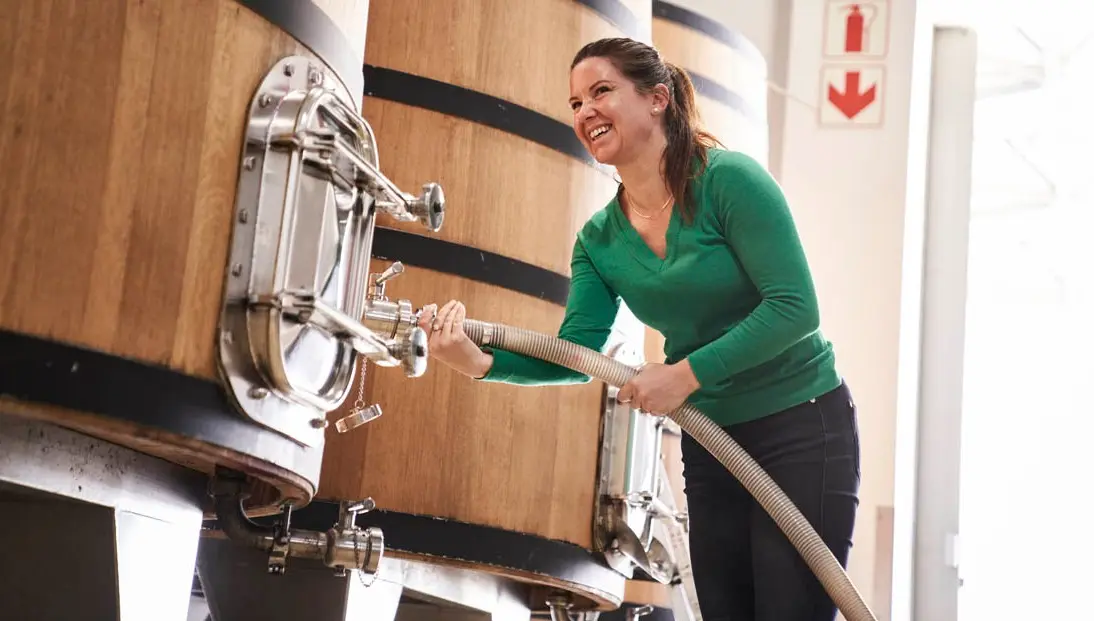
Here’s a curious thing about human psychology: we tend to value things more when they’re difficult to obtain. Andrea Mullineux has built her entire career on exploiting this cognitive bias, though she probably doesn’t think of it that way. While most winemakers chase the latest trends or try to replicate Bordeaux in the wrong climate, Mullineux does something rather more intelligent – she makes wine that her vineyards actually want to produce.
The Magnificent Obsession with Doing Less
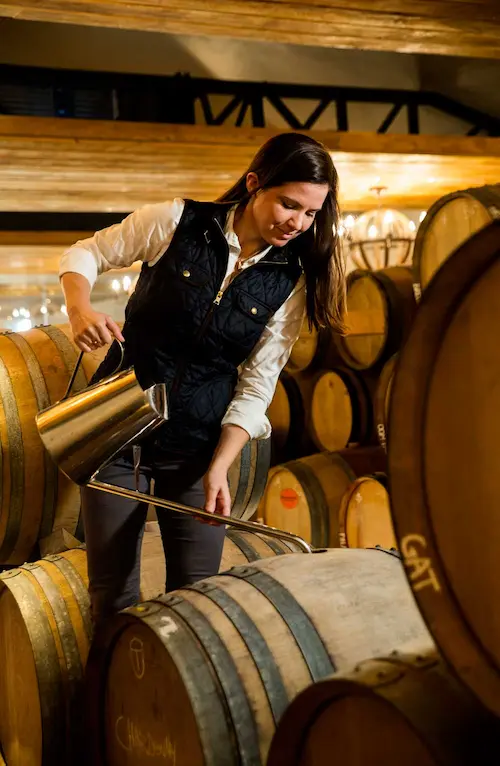
In an industry obsessed with intervention, technology, and control, Mullineux discovered something revolutionary. Nature is quite good at making wine if you don’t interfere too much. Her philosophy of dry-farming Mediterranean varieties in the Swartland isn’t just environmentally sound – it’s psychologically astute.
Consider this, when you taste a Mullineux wine, you’re not just drinking fermented grape juice. You’re experiencing the terroir equivalent of a truth serum. No irrigation means the vines must tell you exactly what the soil and climate are capable of. No heavy manipulation means the grape variety expresses its authentic character. It’s wine as honest conversation rather than wine as performance art.
The Swartland Advantage – Embracing Constraint
Most business advice tells you to maximize your options. Mullineux has done the opposite, deliberately constraining herself to one of South Africa’s most challenging wine regions. The Swartland gets hot. Really hot. Many varieties simply can’t cope. But here’s the counterintuitive insight; by limiting her options to Mediterranean varieties that thrive in these conditions, she’s actually expanded her creative possibilities.
Grenache, Syrah, Mourvèdre, Carignan – these aren’t fashionable grapes in the way Cabernet Sauvignon or Chardonnay are. But they’re perfectly suited to hot, dry conditions. While other winemakers are fighting their environment, Mullineux is collaborating with it. The result? Wines that taste like they could only have come from this specific place at this specific time.
The Guild Factor, Quality as Social Proof
Mullineux’s membership in the Cape Winemakers Guild isn’t just a nice credential – it’s a powerful psychological signal. The Guild represents the aristocracy of South African winemaking, and their approval carries weight that no marketing budget could buy. When your peers – the people who understand exactly how difficult your job is – recognize your excellence, that’s social proof of the most valuable kind.
But here’s what’s interesting about Mullineux’s approach, she didn’t chase Guild membership by trying to make wines that would impress judges. She made wines that expressed terroir authentically, and the recognition followed. It’s the difference between performing confidence and actually being confident.
The Natural Wine Paradox


The natural wine movement often attracts two types of people, genuine terroir obsessives and lifestyle rebels who confuse difficulty with authenticity. Mullineux belongs firmly in the first category. Her low-intervention approach isn’t about making a statement – it’s about revealing what’s already there.
This distinction matters because it affects everything about how the wine tastes and ages. When you remove unnecessary interventions not to prove a point but to express terroir, you get wines that are both intellectually honest and hedonistically satisfying. They’re natural wines that wine lovers actually want to drink, rather than natural wines that make wine lovers feel virtuous about drinking.
The Long Game – Building Reputation Through Consistency
While many producers chase vintage-to-vintage excitement, Mullineux plays a longer game. Her wines are consistently excellent because she’s working with varieties and methods that suit her environment. This isn’t accidental, it’s the result of understanding that reputation is built through reliable excellence rather than occasional brilliance.
The psychological insight here is profound: consumers don’t just buy wine, they buy confidence in their choice. When someone chooses a Mullineux wine, they’re not gambling on whether it will be good but rather investing in a proven system that consistently delivers quality.
Why Place Matters More Than Process
The wine world loves to talk about winemaking techniques, but Mullineux’s success suggests that vineyard selection might matter more than cellar wizardry. By choosing the right varieties for the right place and then getting out of the way, she’s created wines that couldn’t be made anywhere else by anyone else.
This is the ultimate luxury in an age of global homogenization: authenticity. You can’t fake terroir, you can’t manufacture uniqueness, and you can’t replicate the specific combination of soil, climate, and human insight that creates distinctive wine. Mullineux has built her reputation on this simple but profound truth.
Website: https://mlfwines.com/
Contact Number: +27 (0) 21 569 3010