

The journey to South Africa is changing. From new digital travel requirements to expanded international flight schedules and ongoing improvements at the country’s airports, several developments are shaping how visitors will arrive, depart and move through South Africa.
Together, these updates reflect an aviation sector preparing for growing passenger numbers while investing in more efficient travel experiences.
New online traveller declaration becomes mandatory
Anyone travelling into or out of South Africa will soon need to complete an online traveller declaration before beginning their journey.
From 1 July 2026, the South African Revenue Service (SARS) will require travellers arriving or departing by air, land, sea or rail to submit the declaration through the South African Traveller Management System (SATMS). The system, first introduced as a pilot in 2022, has now moved from voluntary participation to a mandatory customs process.
The declaration must be completed within 24 hours before departure from the country where a traveller begins their journey.
According to SARS, the online declaration helps travellers meet their legal obligation to declare goods, currency and other relevant items while simplifying customs procedures before arriving at a port of entry or exit.

Who needs to complete the declaration?
The requirement applies to:
- South African citizens
- Permanent residents
- Foreign travellers entering or leaving South Africa
Parents, guardians or caregivers may complete the declaration on behalf of minors or travellers who cannot complete it themselves.
Travellers who remain within designated transit areas during air or sea connections are exempt, while certain limited paper-based exemptions also remain in place.
To complete the declaration, travellers will need to provide:
- Passport or travel document details
- Travel information
- Contact details
- Information about travelling companions, where applicable
- Declarations relating to goods, currency or bearer negotiable instruments
For travellers on multi-stop journeys to South Africa, the declaration must be submitted within 24 hours before departing on the final leg of the trip.
Turkish Airlines adds more flights to South Africa
Growing international demand is also reflected in expanded airline schedules.
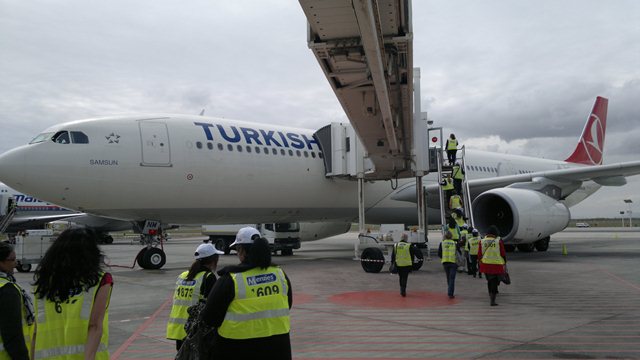
Turkish Airlines will increase services between Istanbul and Johannesburg from seven to ten weekly flights from 25 October 2026.
A day later, on 26 October 2026, flights between Istanbul and Cape Town will also increase from seven to ten services per week.
The additional services are scheduled to operate until the end of March 2027, providing travellers with more options on one of South Africa’s key international routes.
The expanded schedule supports stronger connectivity between South Africa and Europe, the Middle East and beyond through Istanbul’s extensive global network.
Airports continue efforts to improve baggage handling
Passenger numbers may be rising, but airport operators acknowledge there is still work to do when it comes to baggage handling.
According to the SITA 2026 Baggage IT Insights Report, Africa recorded the world’s highest baggage mishandling rate in 2025, with 12.1 mishandled bags per 1,000 passengers.
Airports Company South Africa (ACSA) says South Africa has experienced similar operational challenges, although its own baggage handling performance improved slightly during the past year.
In 2025, ACSA processed 18.4 million bags, compared with 15.7 million the previous year. While the number of mishandled bags increased alongside higher passenger volumes, the overall mishandling rate improved slightly.
ACSA attributes the progress to closer collaboration between airports, airlines, ground handling agents, law enforcement and other aviation partners, including the introduction of a dedicated Baggage Reaction Unit that focuses on identifying operational risks and responding quickly to baggage-related incidents.
Technology expected to play a bigger role
ACSA believes wider adoption of digital baggage tracking could significantly improve the passenger experience across Africa.
The airport operator has already introduced a real-time baggage tracking application that allows passengers to monitor their luggage while travelling through ACSA airports. However, it notes that broader implementation of internationally recognised baggage tracking standards across the continent would improve visibility throughout the baggage journey.
Alongside new technology, ACSA says continued collaboration between airports, airlines, regulators and ground handling companies will remain essential to reducing baggage mishandling.
The organisation also confirmed that its long-term investment programme includes plans to modernise baggage infrastructure and supporting technologies over the next five to ten years.
What these changes mean for travellers
South Africa’s aviation sector continues to evolve as international travel demand grows.
For travellers, that means preparing for new customs procedures before departure, benefiting from additional international flight options and gradually seeing improvements aimed at making airport journeys more efficient.
While each development addresses a different part of the travel experience, together they signal continued investment in strengthening South Africa’s connectivity and improving how visitors move through the country’s transport network.
Source : https://www.travelnews.co.za/