
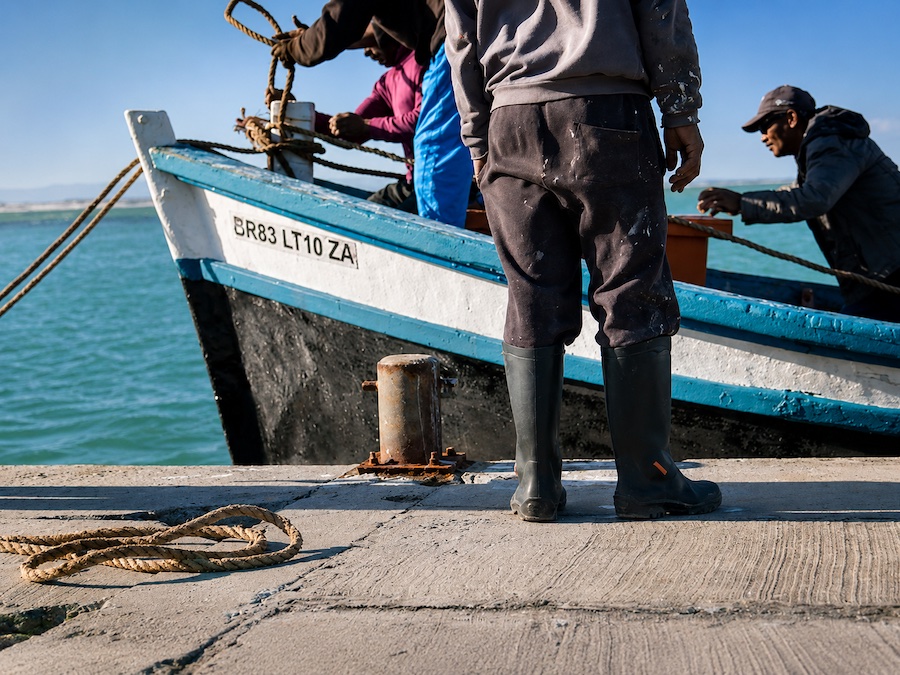
From Ocean to Plate – How the Cape’s Small-Scale Fishers Are Redefining Sustainable Seafood
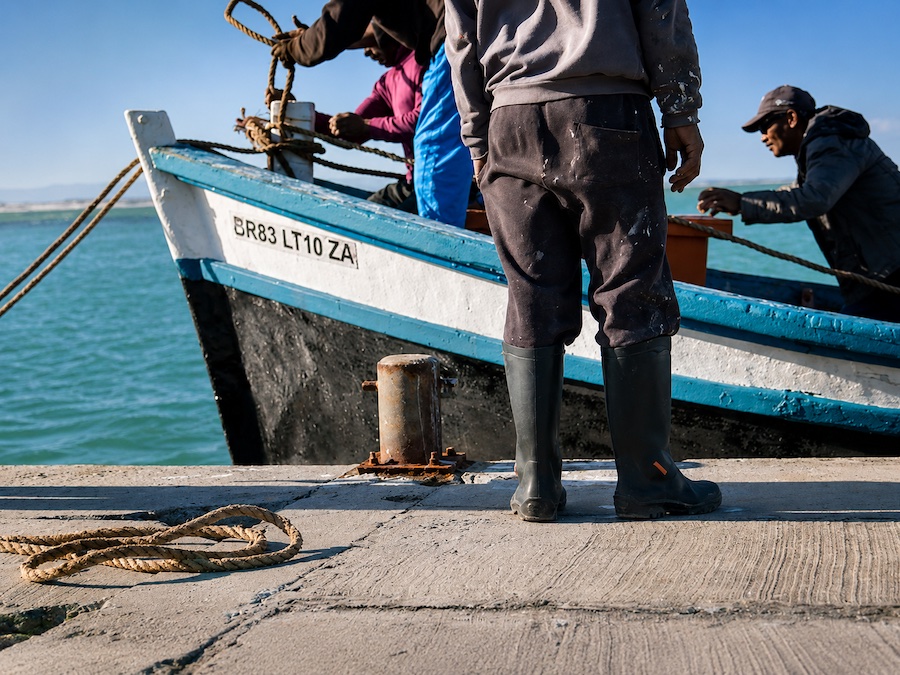
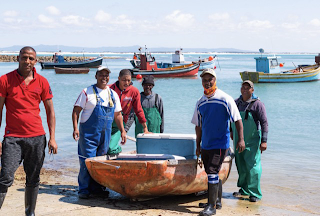
Fresh ice is the trademark of an ABALOBI fisher. Before Wilfred Poggenpoel leaves Lambert’s Bay harbour, his cooler boxes are loaded, his safety gear checked, his tracking systems confirmed operational. The ice matters because quality starts the moment a fish lands. Each one is measured, handled carefully, and packed immediately. No fish sits in the sun. No catch goes unrecorded. Wilfred logs every species on the ABALOBI Fisher app, starting a traceability chain that follows his sustainable seafood all the way to restaurant tables in Cape Town. Diners will scan it, see Wilfred’s face, read his story, and know exactly where their meal came from.
This is what ABALOBI has been quietly building since 2015. A direct link between South Africa’s small-scale fishing communities and the chefs and consumers who value traceable, responsibly caught seafood.
The Fishers
Small-scale fishing has sustained coastal families for generations. Crews head out in small boats using hand lines, traditional methods with a low environmental impact. But the sector faces mounting pressure. Overfishing in previous decades by industrial fisheries has depleted stocks. Limited quotas and complex regulations leave many fishers operating informally, with no access to fair markets or financial services. Previously, buyers paid what they chose, having the upper hand in negotiations. There was no cold chain, no traceability, no record of who caught what or where. There was no agency for small-scale fishers in value chains.
Enter, ABALOBI, meaning “fisher” in isiXhosa. It was co-founded in 2015 by Dr Serge Raemaekers, Nico Waldeck and Abongile Ngongoza as a research project which aimed to marry data science with the deep, local ecological knowledge from small-scale fishers. The project quickly became something broader. Working directly with fishing communities in Lambert’s Bay, the team co-innovated an app that helped fishers to record every catch; species, gear, location, and more. This was the origin of the ABALOBI Fisher app. Importantly, fishers owned and controlled their own data. They could now access and use their digitised data in real time.
In 2018, the initiative expanded to connect fishers with restaurants via a digital platform called the ABALOBI Marketplace. At Bistro Sixteen82, the earliest adopter, each table displayed a carved wooden fish with a QR code. Diners could scan it, see the story of the seafood on their plate, and learn about the fishers and the species. Other restaurants followed. As word spread the fisher programme expanded to include fishing communities such as Arniston, Struisbaai, Buffeljagsbaai, and more along the Cape’s southern and west coasts.
The Cold Chain and the Marketplace
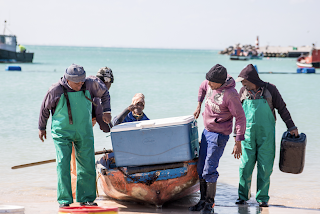
For many small-scale fishers, fishing used to be a cash business with limited formal records and no financial history. They were at the mercy of cash buyers ay the harbour and were predominantly price-takers. ABALOBI changed that. Fishers now receive payment directly into their bank accounts within 48 hours of delivery. Fishers record data on the ABALOBI Fisher app and chefs order via the ABALOBI Marketplace app, so every transaction is recorded. This creates a financial record and profile that enables fishers to apply for fair business loans too; repair boats, purchase better equipment, and more. For the first time, gearbox repairs that once kept boats idle for months can be financed and resolved within days, without having to resort to using loan sharks.
One of the key reasons the ABALOBI Marketplace grew rapidly was the fish quality. The cold chain begins the moment fish are landed onboard the fishing vessel. Fish are iced and slurried immediately on the boat. Teams at the harbour then take temperature readings at several points and record each step in the cold chain. Fish are tagged, and packed into cooler boxes and transferred to Cape Town for processing and delivery – all while the ABALOBI Marketplace platform tracks the fish through delivery. Restaurants and home buyers order directly through the ABALOBI Marketplace app. Each order comes with a unique QR code that links back to the fisher, the vessel, the catch location, the method used, and the community-based quality control teams.
Wolfgat, an internationally renowned restaurant in Parternoster on the Cape’s west coast, has been a long-time supporter of the ABALOBI Marketplace. Chef Kobus van der Merwe is an advocate for traceability and the programme’s approach to supporting coastal communities, saying that:
‘Seeing the real change that fish with a story has in the fishing communities is remarkable. It’s goosebump stuff, really.’
Other restaurants like Tryn, Vadas Smokehouse, De Tafel, and Galjoen have similarly embraced the system, building menus around what the fishers bring in rather than ordering from a fixed product list.
What Diners See
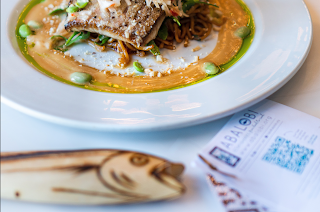
At a Cape Town restaurant using the ABALOBI Marketplace to buy their fish, the menu might list Cape Bream, Yellowtail, Carpenter (Silvers), Gurnard, or Cape Redfish. Next to the dish is a QR code. Scan it and a profile loads: the fisher’s name and face, information about the species, a map that shows where the fish was landed, the boat that the fish was caught from, the community fish cleaners and quality control teams – essentially the story behind the dish, what ABALOBI calls the “Fish With A Story” initiative. Diners can even connect with the fishers. Wilfred Poggenpoel, or Poggie as he is fondly known, recalls messages of thanks appearing on his phone within minutes of service.
To him, these messages received directly from customers enjoying his catch in restaurants make it all worthwhile.
Seasonal Fishing and Stock Rebuilding

Winter on the south and west coasts brings stronger seas and longer intervals between trips. Poggie, a veteran Lambert’s Bay fisherman, explains that during rough weather he might only fish once or twice a month. Summer increases frequency, but even then, responsible harvest is first and foremost. ABALOBI’s data helps. Fishers and scientists at ABALOBI analyse catch trends together. Overfished species are flagged. Minimum sizes and seasonal closures are observed. The information belongs to the communities and informs their approach to fishing, not to distant policymakers.
ABALOBI’s Fisheries Improvement Programme, a world first, is a globally recognised initiative rooted at the community level. It uses fisher-led data to inform fishing decisions and to minimise ecological impact. Marine biologists work alongside fishing crews to identify which fishing areas are appropriate and which stocks can support catch levels. This bottom-up approach has proven more effective than top-down regulation alone.
The Marketplace and Your Pantry
The ABALOBI Marketplace opened in 2018, initially connecting restaurants and chefs to fishers and fishing communities. It now serves home buyers as well. Orders are placed online, the virtual equivalent of standing in the harbour waiting for boats to return. A notification arrives when fresh stock comes in. Payment happens digitally. Fish is delivered the next day.
The coastal communities have also developed their own product lines. The ABALOBI Coastal Pantry includes Suurvygie jam, Sea-lettuce salt infused with coastal botanicals, and preserved seafood products like Mullet Rollmops made by fisher collectives and women’s cooperatives. These items support broader livelihood strategies beyond daily fishing.
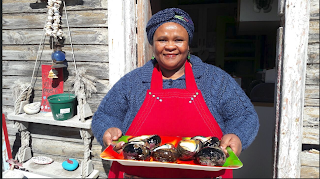
Sarah Niemand, or Aunty Sarah as she is known by the local community in Buffeljagsbaai, is one of the many contributors to ABALOBI’s growing collection of inspirational recipes on the ABALOBI Marketplace app and the Fish With a Story websites. Her Baked Snoek With Suurvygie and Lemon is well worth a try. This heartfelt quote from Aunty Sarah sums up her passion:
‘It has always been my dream that some day people will take us seriously as bona fide small-scale traditional fishers, especially the women fishers, and that people can taste the value of what comes from the ocean.’
So the ABALOBI Marketplace has evolved to not only connect restaurants, chefs and home buyers to local catch, but also to amazing coastal products like the Suurvygie Jam which Aunty Sarah makes, a key ingredient for the above recipe. Together with her husband, Daniel, she founded the Blinkwater Co-operative and supplies these products directly to consumers through the ABALOBI Marketplace platform.
The Challenge of Competing Imports
Locally sourced, responsibly harvested seafood often competes with vast quantities of frozen imports of farmed fish or industrially caught fish. ABALOBI and participating restaurants and chefs argue that price alone misses the point. Traceability, fair wages, and fisheries rebuilding all carry value.
Chris Kastern, ABALOBI’s Head of Growth, explains the tension:
“Locally sourced, responsibly harvested seafood from small-scale fishers struggles to compete with cheaper imports, and inadequate labelling makes transparency difficult.”
Being able to verify where your seafood comes from helps. So does consumer education. A growing share of seafood consumers, 52% according to recent data, now actively seek sustainable options.
The shift in behaviour is real. Restaurants report that menus highlighting ABALOBI’s ‘Fish With A Story’ see higher engagement. Diners ask questions. They want to know the species, the method, the fisher’s story. This creates demand that supports fair pricing.
Formalising the Sector
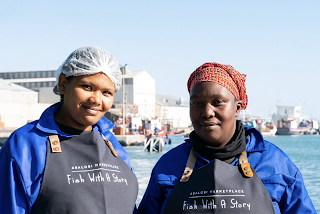
Globally, small-scale fisheries provide livelihoods for millions, food for billions and are an integral part of local coastal communities. In South Africa, formalising this sector offers a route to food security, poverty alleviation, and ecosystem recovery. ABALOBI’s model demonstrates that technology and community partnership can achieve what policy alone has not.
Fishers now have documented income, business accounts, and financial histories. They can apply for loans. They have direct market access. They see real-time pricing and can choose buyers. These changes shift the power dynamic. Fishers are no longer price takers. They are suppliers with agency.
Recognition and Next Steps
In 2023, ABALOBI was named a finalist for Prince William’s Earthshot Prize, one of 15 projects globally recognised for addressing climate and environmental challenges. The recognition brought visibility and new partnerships. More fishing communities have expressed interest in joining. Restaurants outside the Western Cape are starting to order through the platform.
ABALOBI is expanding its reach while keeping its community focus. The organisation works with NGOs and governments to support data collection and skills-building in countries around the globe. The technology is adaptable. Other regions can adopt the model, tailoring it to local conditions and species.
What it Means for Visitors
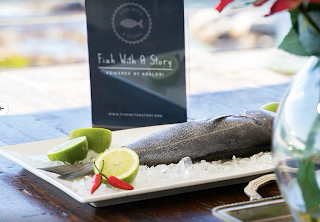
Travellers visiting Cape Town increasingly want to understand where their food comes from. Dining at a restaurant using Fish With A Story offers that connection. The QR code is not a gimmick. It is a window into the working life of South Africa’s coastal communities and the effort required to rebuild fisheries while supporting livelihoods.
Visitors can also order directly through the ABALOBI Marketplace app or online if staying in self-catering accommodation. Fresh line caught fish, delivered with full traceability. The ABALOBI Coastal Pantry products make useful gifts: artisanal preserves and seasonings produced by the same coastal communities that supply the fish.
Several Cape Town restaurants now feature ABALOBI prominently on their menus. Life Grand Café at the V&A Wayerfront, Blondie in Kloof Street, The Mount Nelson Hotel in Gardens, De Tafel in the Southern Suburbs, and Bistro Sixteen82 and Tryn at Steenberg Wine Estate are among those leading the way. Booking ahead and asking about the daily catch often yields the best experience. Chefs enjoy talking about the fish, the fishers, and the coastal communities they support.
Rethinking Sustainability
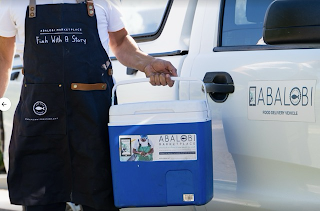
ABALOBI’s model reframes sustainability as something lived daily rather than marketed occasionally. Fishers manage their resources because their children will fish these same waters. Restaurants source locally because quality and story matter. Diners engage because connection adds meaning to a meal.
The system is not perfect. Weather and seasonal variation mean supply is never entirely predictable. But the model works. It scaled from four boats in Lambert’s Bay to dozens of vessels across multiple fishing communities. It moved from a pilot project to a recognised social enterprise with international backing.
For Cape Town’s hospitality sector, ABALOBI offers a credible path to responsible sourcing. For fishing communities, it offers market access, fair payment, and a voice in how their resources are managed. For visitors, it offers a story worth hearing and seafood worth eating.
The next time a Cape Town menu lists local line caught fish served with an ABALOBI QR code, scan it. Read the story. Learn the name. See the face. Understand the work. That connection, from ocean to plate, is what ABALOBI is building.
For More Information
Website: www.abalobi.org | www.fishwithastory.org
Marketplace: www.shop.fishwithastory.or